20 Spring Cliparts: A Designer's Review for Embroidery
As a designer who spends more time staring at stitch maps than most people care to admit, I approach new design assets with a mix of excitement and skepticism. When I first opened the folder for 20 Spring Cliparts, my immediate reaction wasn't just about the colors on the screen; it was about how these shapes would translate into thread. We often forget that what looks crisp as a vector or a high-resolution PNG on a monitor can behave very differently under the needle of an embroidery machine. This review isn't just about aesthetics; it is a practical breakdown of how this collection performs in real-world embroidery projects.
First Impressions: Mood and Visual Personality
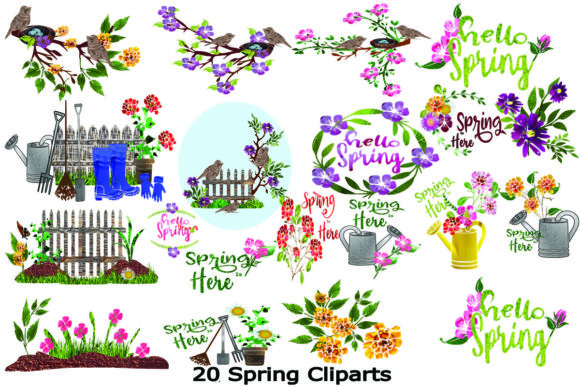
The collection exudes a fresh, optimistic mood that perfectly captures the essence of the season. The shapes are clean, avoiding unnecessary clutter, which is a massive plus for embroidery. In my experience, overly complex Illustrations often turn into a muddy mess of thread when scaled down. These Graphics, however, possess a visual personality that feels modern yet timeless. The lines are distinct, suggesting that they would convert beautifully into satin stitches or clean fill areas without losing their definition.
What stands out immediately is the versatility of the layout. Whether you are looking to create a subtle accent on a pocket or a bold statement on the back of a jacket, the variety within the twenty designs offers enough range to keep your product line feeling fresh. The transparency of the background in the source files makes digitizing—or simply using them as a reference for manual digitizing—much smoother, as there is no noise to filter out.
Real-World Application: From Screen to Stitch
To truly test the viability of 20 Spring Cliparts, I imagined a specific scenario: preparing a custom order for a local boutique needing a series of embroidered tote bags and aprons for their spring launch. The client wanted something cheerful but sophisticated, nothing too childish. Scanning through the collection, several designs jumped out as perfect candidates for tote bag design. The simpler floral motifs would work exceptionally well as a running stitch outline on natural canvas, providing a handmade, organic feel that customers love.
For the aprons, I envisioned using the bolder elements as a central focal point. Here, the clarity of the design becomes crucial. If you are planning to use these for sweatshirt embroidery, the thickness of the fleece requires a design with strong definition so it doesn't get lost in the nap of the fabric. The shapes in this pack seem robust enough to handle the texture of heavier garments while still looking sharp on finer materials like cotton twill.
Beyond apparel, these designs have strong potential for home decor. Imagine a set of kitchen tea towels featuring a single, delicate motif from the set in a contrasting thread color. Or perhaps a nursery project where baby embroidery is required; the gentle curves and friendly themes fit perfectly for onesies or blanket borders. The key here is that the designs do not scream "stock image." They feel curated enough to be part of a cohesive brand identity for a small shop product.
Navigating Technical Challenges
While the visual appeal is high, a responsible designer must consider the technical limitations of embroidery. Not every graphic translates perfectly to thread without adjustment. When working with 20 Spring Cliparts, you need to be mindful of stitch density. If you are digitizing these yourself or sending them to a digitizer, ensure that the fill areas aren't too dense, which can cause puckering, especially on stretchy fabrics or thin materials.
Small hoop sizes present another consideration. Some of the more detailed elements in the collection might lose their charm if shrunk too small for a cap or a sock. Intricate corners and tiny details can easily become blobs of thread if the hoop size restricts the stitch length or if the stabilizer isn't up to the task. For curved surfaces like caps, I would recommend selecting the simpler designs from the pack to avoid registration issues during stitching.
Fabric texture plays a huge role in the finished product. On dark fabric, you will need to pay close attention to underlay stitching to ensure the bright spring colors pop without the background showing through. Conversely, on light fabrics, ensure your thread choices provide enough contrast so the design doesn't wash out. Always test the design on scrap fabric first. This golden rule cannot be overstated. Seeing how the satin stitch edges lay on a specific material can save you from ruining a client's garment.
Enhancing Product Value and Brand Consistency
Using high-quality graphics like 20 Spring Cliparts directly impacts the perceived value of your handmade product. Customers can tell the difference between a pixelated, poorly adapted image and one that has been thoughtfully integrated into an embroidery design. When the stitching is clear and the design is appropriate for the medium, it builds customer trust. It signals professionalism and attention to detail.
For Etsy sellers and creative entrepreneurs, consistency is key to building a recognizable brand. This collection offers a unified aesthetic that can tie together a whole season's worth of inventory. Whether you are creating holiday embroidery for Easter or general spring merchandise, maintaining a consistent visual language helps buyers recognize your work instantly. Furthermore, these assets are excellent for creating printable mockups to showcase your products online before you even stitch a single thread, helping you gauge market interest efficiently.
Practical Notes for the Professional Maker
Before diving into production with 20 Spring Cliparts, here are a few essential steps to ensure success:
- Check Licensing: Always confirm the license terms before selling finished items or digital products. Ensure the usage rights align with your business model, whether it's for personal gifts or commercial sales.
- Verify File Formats: The product description mentions receiving an SVG file containing PNGs. Remember that SVGs are vectors, great for scaling, but they are not native machine embroidery design files (like PES, DST, or EXP). You will likely need to digitize these or use software to convert them, checking for compatibility with your specific machine.
- Stabilizer Selection: Match your stabilizer to the fabric. A cut-away might be necessary for stretchy custom apparel, while a tear-away could suffice for stable woven fabrics like those used in patches.
- Color Testing: Test your thread palette against both light and dark backgrounds. Sometimes a color that looks vibrant on screen appears dull once stitched.
- Scale Appropriately: Avoid forcing a complex design into a tiny space. If a motif feels too crowded at 2 inches, try it at 4 inches or choose a simpler alternative from the set.
In conclusion, 20 Spring Cliparts offers a solid foundation for a variety of creative endeavors. It bridges the gap between digital convenience and tactile craftsmanship. By approaching these Graphics with a critical eye for embroidery specifics—density, fabric interaction, and scale—you can transform simple clip art into stunning, sellable embroidered patch designs, apparel accents, and cherished personalized gifts. The potential is there; it just requires the skilled hand of a maker to bring it to life.