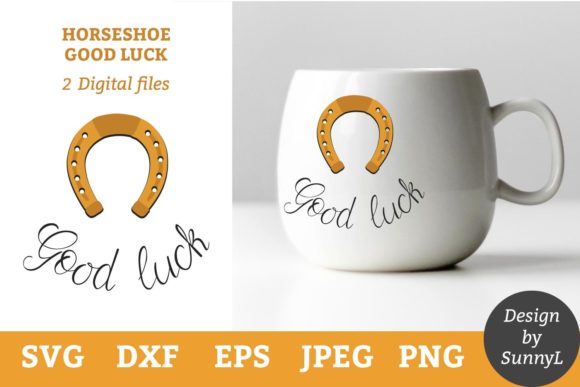
Horseshoe Good Luck St. Patricks Day Design Review
As a designer who spends more time at the hoop than away from it, I approach every new digital embroidery file with a critical eye. It is not just about whether the image looks cute on a screen; it is about how those vectors translate into thread, how the density sits on fabric, and whether the final finished product will hold up to the scrutiny of a paying customer. Today, I am evaluating the Horseshoe Good Luck St. Patricks Day design. While the product description notes this is primarily a vector cutting file for machines like Silhouette or Cricut, and suitable for printing or sublimation, my focus is strictly on its potential adaptation and utility within the realm of machine embroidery and handmade goods.
First Impressions: Mood and Visual Personality
The moment you pull up the Horseshoe Good Luck St. Patricks Day graphic, the mood is immediately clear. It strikes that perfect balance between rustic charm and festive celebration without veering into cartoonish territory. The horseshoe is a universal symbol of fortune, and pairing it with St. Patrick's Day themes creates an instant emotional connection for anyone looking for a bit of luck. For an Etsy seller or craft business owner, this visual personality is gold. It speaks to tradition, warmth, and the specific joy of the March holiday season.
From a layout perspective, the design feels balanced. In the context of Crafts and Graphics, simplicity often wins because it translates better across different mediums. Whether you are envisioning this as a bold statement on a tote bag or a subtle accent on a kitchen towel, the core shape is strong. However, because this originates as a vector for cutting and printing, an embroiderer must mentally deconstruct how these lines will become stitches. Will the curves of the horseshoe require a smooth satin stitch, or is it better suited for a textured fill stitch? These are the questions that determine if a design moves from a pretty picture to a viable embroidery project.
Real-World Application: The Custom Tote Scenario
To truly test the viability of this design, I imagined a specific real-life scenario: preparing a run of custom embroidered tote bags for a local boutique's St. Patrick's Day promotion. Tote bags are notoriously tricky; the canvas is thick, the weave is loose, and the surface is rarely perfectly flat. If I were to adapt this Horseshoe Good Luck St. Patricks Day concept for embroidery here, the durability of the stitch would be paramount.
Imagine stitching this onto a natural cotton canvas. The contrast of bright green or gold thread against the neutral background would pop beautifully. However, the success of this handmade product relies heavily on execution. If the design includes intricate details meant for cutting, those might get lost in thread unless simplified. For a personalized gift or a small shop product, the customer expects crisp lines. If the horseshoe ends up looking muddy due to excessive stitch density or poor digitizing adaptation, the perceived value of the item drops instantly. This design shines best when used where its iconic shape can breathe, perhaps as a larger centerpiece on a sweatshirt embroidery project or a sturdy embroidered patch that can be sewn onto denim jackets.
Navigating Fabric Challenges and Hoop Limitations
One of the most critical aspects of using any design, especially one adapted from a cutting file, is understanding where it might fail. The Horseshoe Good Luck St. Patricks Day motif has curved edges that demand precision. On stretchy fabrics like jersey knits used for baby embroidery or t-shirts, there is a risk of distortion. Without the proper stabilizer, those clean vector lines could warp, turning a lucky horseshoe into a misshapen blob. I would strongly advise testing this on scrap fabric first, specifically checking how the design behaves on both woven and knit textures.
Furthermore, consider the hoop size. If you are aiming for custom apparel like caps or visors, the curved surface adds another layer of complexity. Small, detailed elements within the graphic might not stitch out clearly on a curved brim. Similarly, if the design includes any fine lettering or tiny shamrock accents often associated with this theme, they need to be scrutinized. Tiny details are the first to suffer on dark fabrics or textured materials like towels. For a holiday embroidery run on tea towels, you might need to increase the scale of the design to ensure the running stitch outlines remain distinct and do not sink into the looped fabric.
Commercial Viability and Brand Consistency
For commercial embroidery professionals and digital product sellers, consistency is key to building trust. If you plan to sell items featuring this design, the visual appeal must be consistent across your inventory. Does the Horseshoe Good Luck St. Patricks Day graphic look professional when stitched in a single color for a minimalist aesthetic? Does it hold up when rendered in multiple thread colors for a vibrant look?
Using this design effectively can enhance your brand's reputation for quality. A well-executed horseshoe on a high-quality hoodie signals attention to detail. Conversely, a poorly adapted design can lead to returns and negative reviews. It is essential to verify the licensing terms before selling. Since the source material is described as a vector for cutting and sublimation, you must confirm if the creator allows for derivative works in embroidery or if you need to purchase a specific commercial license for stitched goods. Never assume a cutting file license covers design assets for embroidery machines.
Practical Notes for the Serious Maker
Before committing to a production run, here are my practical recommendations for working with this type of graphic:
- Test on Scraps: Always stitch a sample on the exact fabric you intend to use. Check for puckering and registration issues.
- Check Contrast: View your mockups in black and white. If the design loses its definition without color, the stitch types may need adjustment.
- Review Density: Ensure the fill areas are not too dense, which can cause needle breakage or fabric stiffness, especially on baby clothes.
- Verify Licensing: Confirm with the seller that the file usage extends to physical goods sold for profit.
- Stabilizer Selection: Match your stabilizer to the fabric weight. Heavy canvases need different support than lightweight linens.
In conclusion, the Horseshoe Good Luck St. Patricks Day design offers a charming foundation for a variety of creative projects. While it is marketed as a vector for cutting and printing, its strong silhouette makes it a promising candidate for embroidery adaptation. With careful consideration of fabric texture, stitch technique, and licensing, this graphic can become a standout element in your printable mockup portfolio or your next line of custom apparel. It is a reminder that great designs are versatile, but great products are the result of thoughtful execution.